
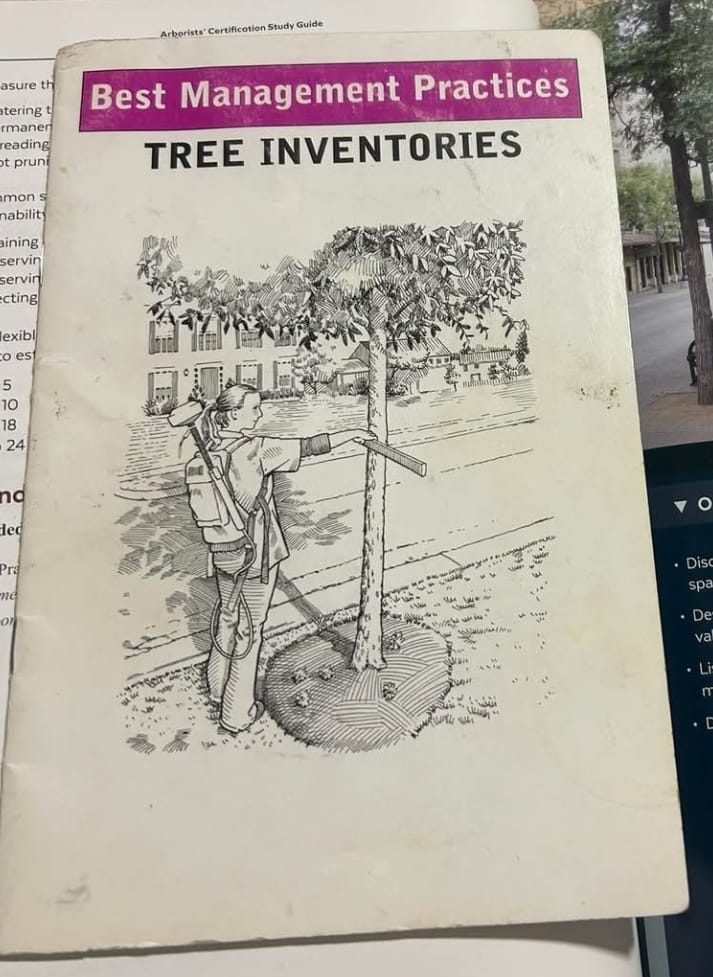
Case Study Summary
Published by: International Society of Arboriculture
Field: Urban Forestry, Arboriculture, Environmental Management
1. Historical Context: Why Tree Inventories Matter
Historically, trees in cities were managed reactively—only addressed when they became hazardous, diseased, or interfered with infrastructure. As cities expanded in the 20th century, urban trees faced increasing pressure from development, pollution, and climate stress.
This book documents the professional shift from reactive tree care to data-driven urban forest management, marking an important milestone in environmental and arboricultural history.
Tree inventories emerged as a solution to answer critical questions:
- What trees do we have?
- Where are they located?
- What condition are they in?
- How should limited resources be prioritised?
2. What Is a Tree Inventory?
A tree inventory is a systematic record of trees, including:
- Species identification
- Tree size and structure
- Health and condition
- Risk level
- Maintenance needs
- Location data (often GPS-based)
The book explains how inventories evolved from handwritten records and paper maps to digital databases and GIS-enabled systems, reflecting broader historical trends in technology adoption.
3. Evolution of Professional Standards
Before formal standards, tree assessments varied widely between cities and practitioners. This created inconsistency and safety risks.
This Best Management Practices (BMP) guide represents:
- The standardisation of arboriculture practices
- The professionalisation of tree management
- A move toward accountability and evidence-based decision-making
It highlights how trained arborists began using shared terminology, rating systems, and inspection methods—similar to how engineering and medical fields matured over time.
4. Key Lessons from the Case Study
Lesson 1: Data Enables Long-Term Thinking
Historical records allow cities to track tree populations over decades, supporting sustainable planning rather than short-term fixes.
Lesson 2: Public Safety and Environmental Care Are Linked
Tree inventories balance human safety with environmental protection—an important lesson in responsible governance.
Lesson 3: Technology Changes Environmental Management
The book shows how digital tools transformed arboriculture, mirroring broader technological revolutions in other industries.
Lesson 4: Standards Build Trust
Consistent methods improve trust between arborists, governments, and the public.
5. Why This Book Is Important for Students
For students, this book is more than a technical manual—it is a historical case study showing:
- How environmental professions evolve
- How science, policy, and technology intersect
- How data supports sustainability goals
- How cities learn to value trees as assets, not obstacles
It demonstrates that modern smart-city and ESG initiatives are built on decades of professional learning and standard-setting.
6. Relevance to Today’s Digital and ESG Era
Many ideas in this book now underpin:
- Smart city platforms
- Tree risk management systems
- Carbon accounting and urban cooling strategies
- AI-based tree health monitoring
Understanding these foundations helps students appreciate why modern digital tree systems exist and how history shapes innovation.