
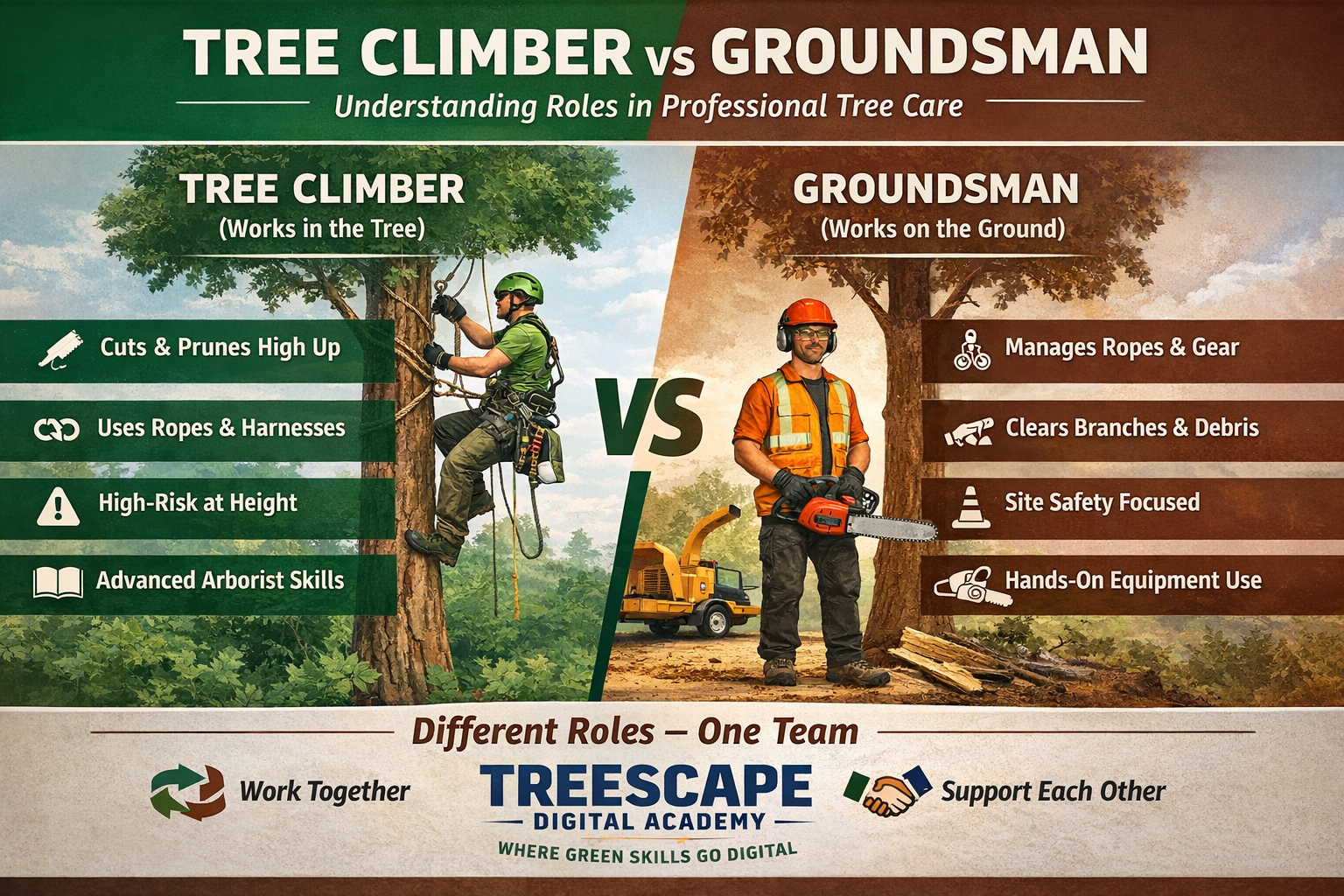
In arboriculture and tree care operations, tree work is always a team effort. Two of the most important roles on any job site are the Tree Climber and the Groundsman. While they work closely together, their responsibilities, skills, and risks are very different.
Understanding these roles is essential for students, trainees, and anyone new to the tree care industry.
1. Who Is a Tree Climber?
A Tree Climber (also called a climbing arborist) is the specialist who works off the ground, ascending trees to carry out pruning, dismantling, inspections, or rigging operations.
Key Responsibilities
- Climbing trees using ropes, harnesses, and climbing systems
- Performing pruning, crown reduction, or deadwood removal
- Dismantling trees section by section in confined spaces
- Installing rigging systems to lower heavy branches safely
- Assessing tree structure and defects while aloft
Skills Required
- Advanced rope and climbing techniques
- Strong understanding of tree biology and structure
- Risk awareness and decision-making at height
- Physical strength, balance, and endurance
Risk Level
Tree climbers face high-risk conditions, including:
- Working at height
- Falling branches
- Equipment failure
- Fatigue-related mistakes
This is why climbers usually require formal training and certification, often aligned with standards promoted by organisations such as the International Society of Arboriculture.
2. Who Is a Groundsman?
A Groundsman (or ground crew member) works on the ground, supporting the climber and ensuring the site operates safely and efficiently.
Key Responsibilities
- Managing ropes and rigging systems from the ground
- Operating chainsaws and wood chippers
- Clearing branches, logs, and debris
- Maintaining tools and equipment
- Setting up safety zones and traffic control
- Communicating constantly with the climber
Skills Required
- Strong situational awareness
- Knowledge of rigging and load control
- Equipment handling and maintenance
- Clear communication and teamwork
Risk Level
While the groundsman works on the ground, the role is not low risk. They must stay alert to:
- Falling branches
- Tensioned ropes under load
- Moving machinery
- Public or traffic hazards
A skilled groundsman is critical to preventing accidents.
4. Why Both Roles Are Equally Important
A common misconception is that the tree climber is the “main” role. In reality:
- A climber cannot work safely without a competent groundsman
- A groundsman’s actions directly affect the climber’s safety
- Most serious accidents happen due to poor ground coordination
Tree work succeeds only when both roles function as one team.
5. Career Path: Groundsman to Tree Climber
Many professionals begin their careers as groundsmen. This allows them to:
- Learn tree operations safely
- Understand rigging forces and workflows
- Build experience before climbing
With time, training, and certification, a groundsman can progress to becoming a tree climber.
This progression model supports safer skills development and long-term professional growth.
6. Why This Difference Matters Today
In modern arboriculture—especially with:
- Digital job tracking
- Safety audits
- ESG and sustainability reporting
- Smart city tree management
Clearly defined roles improve:
- Safety performance
- Training quality
- Accountability
- Operational efficiency
Understanding these roles is essential for students preparing for real-world tree operations.
Final Takeaway
A Tree Climber focuses on skilled work at height.
A Groundsman ensures safety, control, and efficiency on the ground.
Different responsibilities.
Different risks.
One team, one outcome: safe and professional tree care.